Work
Training When You Work a Physical Job: How to Balance Work and the Gym
If your job is already physical, the gym isn't the only place your body is working. How to fit training around work, rosters, sleep and recovery.
Recovery Edition Editorial ·
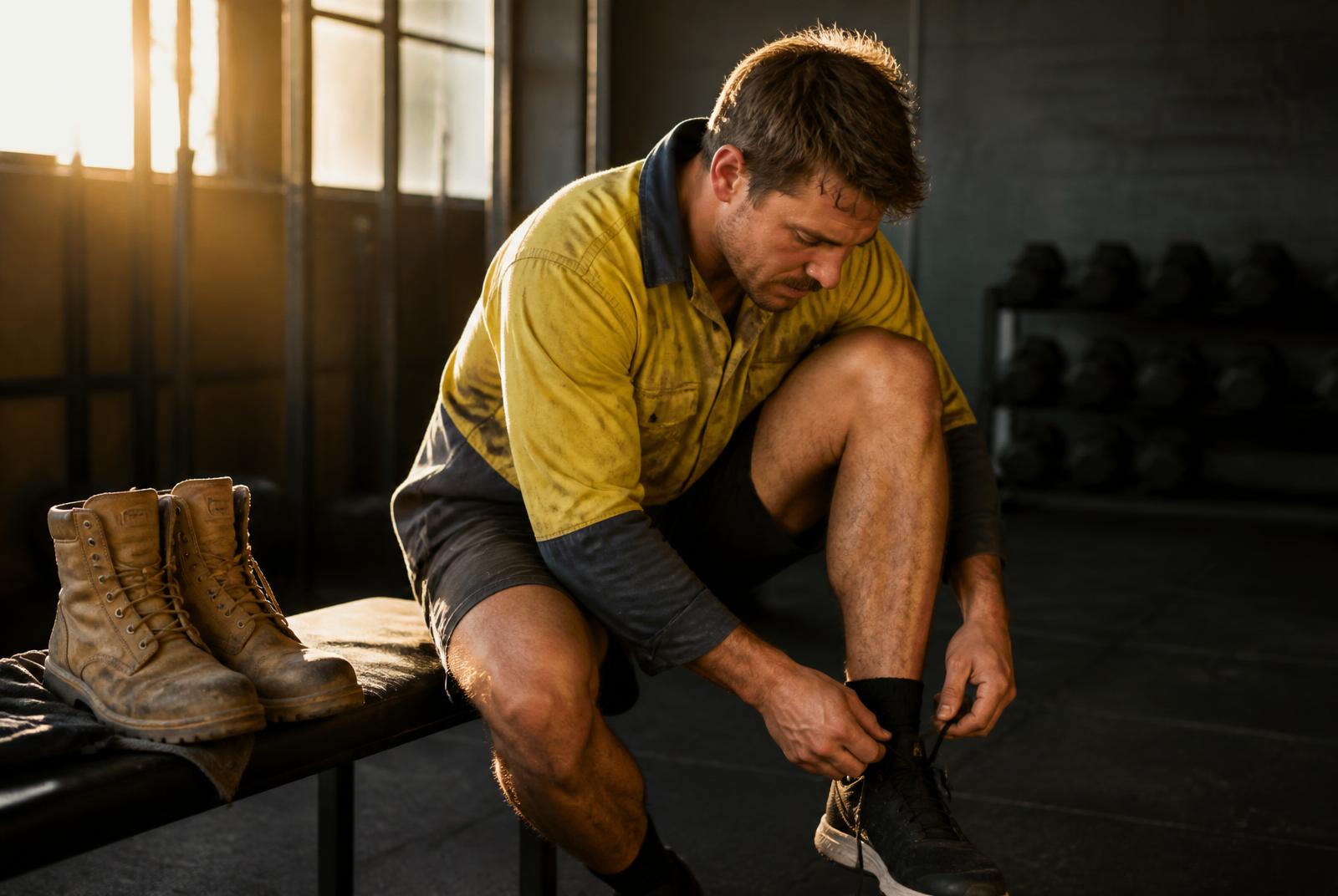
If your job is already physical, the gym isn't the only place your body is working. A day spent lifting, carrying, climbing, walking, standing or repeating the same demanding movement changes how a training session feels — particularly across several workdays in a row.
So the short answer to the question most people are actually asking: yes, you can combine a physical job with regular training. But the amount, the timing and the intensity of that training usually need to reflect what work is already asking of you, and how much recovery you get between sessions.
Your Workload Doesn't Start at the Gym
Training programmes tend to be written as though the rest of the week is neutral. For someone on a site, in a warehouse or on the tools, it isn't. The workday is often the single largest physical thing they do, and it doesn't get logged anywhere.
- Lifting and carrying, repeated through a shift rather than in sets.
- Prolonged standing and walking, sometimes on concrete or uneven ground.
- Repetitive movement — the same task done hundreds of times a day.
- Awkward or sustained positions: overhead work, kneeling, crouching in tight spaces.
- Climbing ladders, scaffold or stairs.
- Heat, humidity and cold, indoors or out.
- Protective equipment that traps heat and adds weight.
- Long shifts, early starts, night work and travel time.
- Consecutive workdays with no proper break in between.
None of that is the same thing as structured resistance or cardio training, and it's not useful to pretend it is. Occupational activity is less predictable, harder to progress deliberately, and lasts as long as the shift does rather than as long as the session. It also varies enormously between jobs and between people — a landscaper's week, a warehouse picker's week and a boilermaker's week look nothing alike. Safe Work Australia's guidance on hazardous manual tasks is the right reference for the work-design side of that, because loads, task rotation and equipment are employer obligations, not personal habits.
What matters for training is simply that your body doesn't keep separate ledgers. Work and training add into one total. Our companion guide on recovery after physical work covers the between-shift side of that in more detail.
Can You Still Build a Training Routine?
Yes — plenty of people do. What there isn't is a universal schedule that suits every physical job. How many sessions fit into your week depends on a fair few things at once:
- The type of work you do, and how demanding it actually is day to day.
- What you're training for — strength, general fitness, a sport, or keeping a habit going.
- How hard your sessions are, not just how many there are.
- Your roster, including consecutive days, shift length and travel.
- How much sleep you're realistically getting.
- Any sport or other activity already in the week.
- How long you've been training, and how you personally recover.
More sessions are not automatically better. Three sessions you finish properly across a working week will usually do more than five you scrape through and then abandon in week two. How often should you train? works through weekly frequency in more depth.
Before Work or After Work?
This is the practical question most people with a physical job are weighing up, and it doesn't have a single right answer.
Training before work
- You may feel fresher, particularly for heavier or more technical sessions.
- It happens before the day has a chance to derail it.
- It usually means an earlier start, which has to come from somewhere — often sleep.
- You then have to work the shift afterwards, which matters if the job is demanding.
Training after work
- Easier to schedule for a lot of people, and no earlier alarm.
- You arrive with the day's fatigue already in the tank.
- Finish times aren't always predictable, especially with overtime or callouts.
- How useful the session is depends heavily on what the shift involved.
Neither option is superior in general. The best time to train is the one that fits your roster, your workload and your sleep, and that you can repeat often enough for it to count.
Hard Workday? Your Training Can Change
A session written into a plan isn't a fixed obligation regardless of what the day did to you. Treating it as adjustable is what makes training around physical work sustainable rather than a fortnightly experiment.
- Reduce the demand of the session rather than cancelling it outright.
- Change what you're doing — if work already flogged one pattern, choose differently.
- Do an easier version and finish it feeling better than you started.
- Move the session to another day where the roster allows.
- Choose easy movement instead of a session.
- Take a rest day, without treating it as a failure.
Which of those makes sense depends on the day. Rest day vs active recovery weighs up doing nothing against doing something easy, and active recovery covers what an easy day actually looks like in practice.
What About Training When You're Sore?
Ordinary muscle soreness after work or training and pain that feels significant are two different things, and they deserve different responses. Everyday stiffness that eases as you warm up is common. Sharp pain, swelling, or something that feels wrong rather than tired is not the same category.
We've covered the decision in detail in should you train when sore? — worth reading if this comes up most weeks for you.
Physical Work and Strength Training
It's a fair question: if the job already involves lifting and carrying, why add more? For a lot of people the answer is that occupational activity and structured training are aimed at different things. Work loads whatever the task happens to load, in whatever position the job requires, at whatever intensity the day dictates. Training lets you choose the movement, control the load and progress it deliberately.
- Training goals — strength, muscle, general fitness or sport — aren't automatically met by a busy shift.
- Structured sessions can be adjusted; a job usually can't.
- Technique and gradual progression are easier to manage in the gym.
- Consistency over months matters more than any single session.
- Total demand still has to be managed, because work doesn't stop while you train.
What strength training shouldn't be sold as is injury-proofing. Workplace injury risk is shaped by task design, loads, equipment, fatigue and organisation of work, and no gym programme substitutes for that.
Physical Work and Cardio
Being on your feet all day is genuine activity, but it doesn't automatically cover every fitness goal. A shift spent walking site is not the same stimulus as structured conditioning, and plenty of physical workers find their cardiovascular fitness doesn't match how tired the day makes them.
The flip side is the same workload point as everywhere else. If you're already doing substantial physical work, adding running, riding or conditioning sits on top of that total rather than beside it — so how much you add, and how hard, is worth deciding on purpose instead of by enthusiasm.
FIFO and Roster Work Changes the Equation
Fly-in fly-out and other roster work adds constraints that a standard training week doesn't account for. Rosters vary widely, and so do the jobs sitting inside them — an operator's swing isn't a shutdown fitter's swing.
- Long shifts, often ten to twelve hours or more, before travel time is counted.
- Consecutive workdays, sometimes for a couple of weeks straight.
- Site gyms that may be excellent, basic, or busy at exactly the wrong hour.
- Early starts and night shifts that move sleep around.
- Flights, drives and buses on changeover days.
- Two different routines: one on swing, one at home.
- Plenty of people who genuinely like training while they're away — it's often the best part of the day.
For most roster workers the practical approach is to plan training around the shape of the swing rather than fighting it: keep the harder work for the days that allow it, keep something going on the heavy days, and accept that the home block and the site block won't look the same.
Work on site and train while you're away?
We've built a dedicated Recovery Edition resource around work, training, recovery and the science behind carnosine.
The Recovery Basics Matter More
When work is already a large physical load, the unglamorous parts of recovery do more than anything else you could add.
- Sleep, protected as far as your roster and household allow.
- Enough food across the day for the work you're doing, not just at dinner.
- Fluids through the shift rather than trying to catch up afterwards.
- Actual downtime, where you're not asking anything of your body.
- Training demand you've chosen deliberately, rather than inherited from a programme.
- Rest days, and enough gap between the harder sessions.
- Recovery between workdays, not only after workouts.
The detail sits across three guides: how to recover after a workout, how long should you rest between workouts? and recovery after physical work.
A Simple Work + Train Check
Before you train
- How physically demanding was work today?
- What training did I already do this week?
- How am I feeling during normal movement?
- Am I unusually fatigued?
- How much sleep have I realistically had?
- Does today's session need to be hard?
- Would an easier session make more sense?
- Would a rest day make more sense?
- Is there pain or another symptom that feels unusual or concerning?
This is a general decision aid, not individual training or medical advice.
Don't Compare Your Training Week to Someone Else's
Two people can follow the same programme and arrive at the same session in completely different states. One of them drove in from an air-conditioned office. The other spent nine hours on a roof in February. The written programme is identical; the week isn't.
That's worth remembering when you're measuring your training volume against a fitness influencer whose job is training, a mate who works at a desk, or a generic twelve-week plan that assumed nothing else was happening. It's also worth remembering across a roster — the version of your week that works on a home block may not be the version that works on swing.
The useful comparison is with your own weeks: what you managed, how it went, and what you can repeat.
When Pain Is More Than Normal Fatigue
Some things shouldn't be filed under ordinary work or workout fatigue:
- Sharp or sudden pain.
- Significant swelling.
- Loss of normal function or movement.
- Symptoms that followed an obvious injury or incident at work.
- Symptoms that persist or keep getting worse.
- Anything else that feels concerning or unusual for you.
Those are worth getting assessed by a GP or another qualified health professional rather than trained around, and a work-related injury is also worth reporting through your workplace's process.
The Bottom Line
You can train while working a physically demanding job, and a lot of people do it for years. Work contributes to the total physical demand you're managing, so training frequency, intensity and recovery may need to reflect what happens outside the gym as well as inside it.
More on how that plays out sits in the Work hub, the Train hub and the Recover hub.
Sources & further reading
- Safe Work Australia — Hazardous manual tasks
- Safe Work Australia — Fatigue
- Safe Work Australia — Working in heat
- Australian Institute of Sport — Recovery (Australian Sports Commission)
- Healthdirect Australia — Exercise and physical activity
- Healthdirect Australia — Sleep
- Department of Health and Aged Care — Physical activity and exercise guidelines for all Australians
- Better Health Channel — Resistance training: health benefits
Recovery Edition publishes general informational content. It is not medical advice and is not a substitute for care from a qualified health professional.
- Physical Work
- Training
- Workload
- Shift Work
- FIFO
- Gym