Recover
How to Recover After a Workout: A Practical Recovery Routine
Cooling down, replacing fluids, eating, resting and sleeping well — how the basics come together into a post-workout recovery routine you can actually repeat.
Recovery Edition Editorial ·
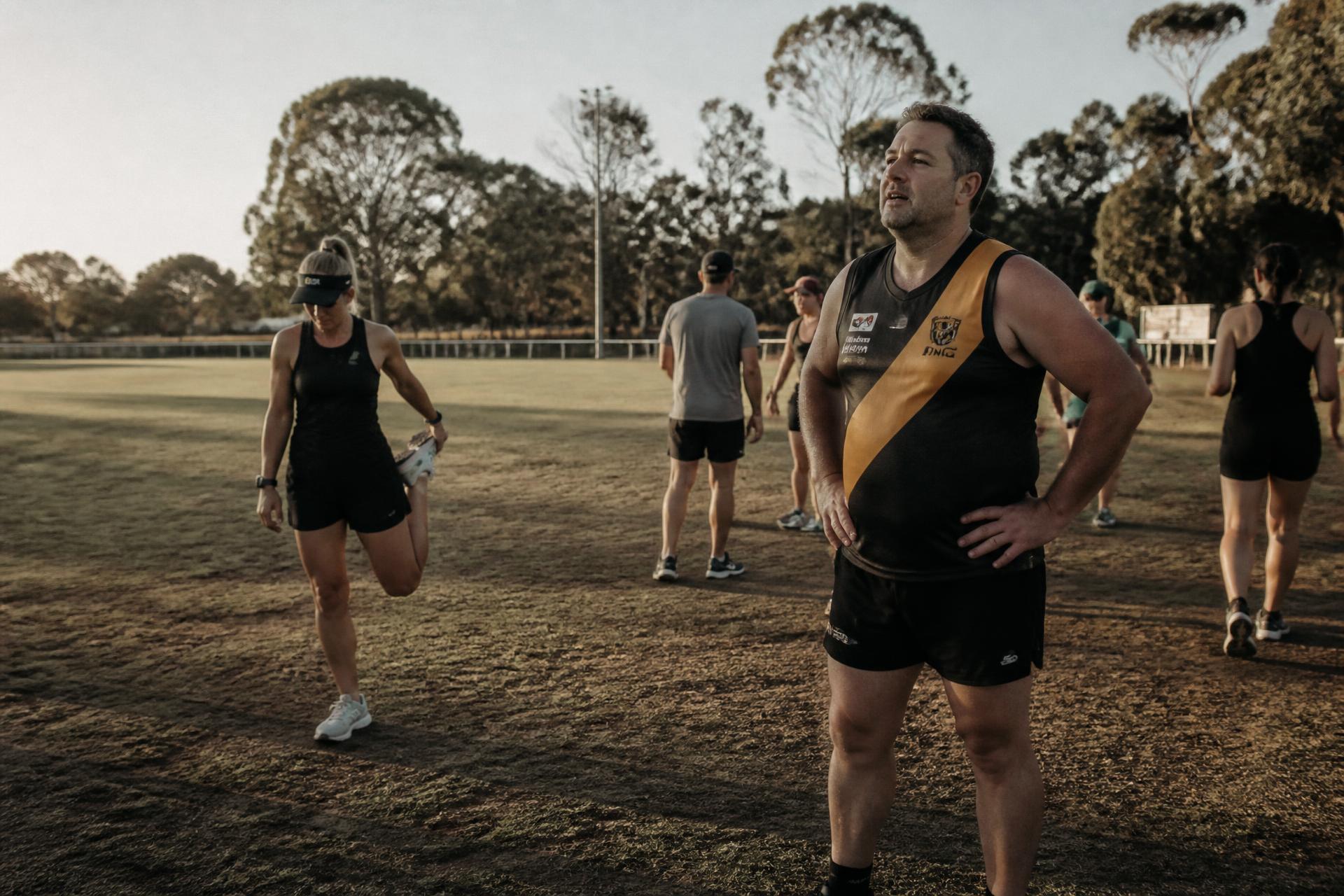
A good recovery routine doesn't need to be complicated. What you do after training can be as simple as cooling down, replacing the fluids you've lost, eating something useful, giving your body appropriate rest and getting decent sleep before you train again.
What that looks like in practice depends on you. A 40-minute easy run on a mild morning asks less of your body than a heavy leg session, a hard interval set, or a Saturday game in the heat. Your age, training history, work, sleep and how soon you plan to train again all change what recovery needs to cover. There is no single perfect routine — just a set of fundamentals you arrange to suit your week.
1. Give Yourself Time to Cool Down
Going straight from a hard effort to sitting in the car is a jarring transition. A few minutes of easy movement at the end of a session — walking, an easy spin on the bike, or gentle mobility for whatever you've just worked — lets your breathing and heart rate settle and gives you a moment to notice how the session actually felt.
Treat a cool down as a way to finish properly rather than as insurance. The evidence for cool downs preventing muscle soreness or injury is not strong, so it's worth doing because it's comfortable and it bookends the session, not because it guarantees anything.
2. Rehydrate
You lose fluid whenever you sweat, and replacing it is one of the more straightforward parts of recovery. Drinking steadily across the hours after training usually works better than forcing down a large volume in one go.
How much you need varies a lot. Session length and intensity, how heavily you sweat, heat and humidity, clothing and what you drank beforehand all matter, which is why blanket targets rarely fit. Useful signals are simple: thirst, the colour of your urine, and whether you feel flat later in the day. If you've trained hard in the heat or for a long time, food eaten alongside your drink will help replace sodium and other electrolytes lost in sweat.
For hot-weather sessions and long days on your feet, our Move hub covers the same habits in a running and field-sport context.
3. Refuel After Training
Food is doing quiet work in recovery. Carbohydrate helps restore the fuel your muscles used, and protein supports the repair and adaptation that training sets off. For most people, that means a normal meal — not a special protocol.
- A meal containing both carbohydrate and protein reasonably soon after a hard session.
- Something portable if a proper meal is hours away — a sandwich, yoghurt and fruit, milk, or leftovers.
- Enough food across the whole day, not just in the window after training.
Exact amounts depend on your body size, the type and volume of your training and your broader goals. If you're chasing specific targets, or you have a medical condition or dietary restriction, that's a conversation for an accredited sports dietitian rather than a website. Supplements are a personal decision and are not a substitute for eating well.
4. Keep Moving — Gently
The day after a hard session, most people feel better for moving a little. A walk, an easy ride, a swim or a few minutes of mobility keeps you loose without adding meaningful load. Stretching, foam rolling and massage can feel good and many people like them as part of winding down.
Be sceptical of promises here. Light movement and stretching are pleasant and low-risk, but they don't reliably eliminate delayed onset muscle soreness or prevent injury. Keep it comfortable — if it turns into another session, it stops being recovery. We look at easy days in more detail in active recovery: what it is and when to use it, and our Train hub goes further into how easy days sit alongside hard ones.
5. Build a Recovery Routine That Works for You
Recovery isn't one product, one hack or one habit. It's the sum of a handful of things you do consistently:
- Replacing fluids after you sweat.
- Eating enough, with carbohydrate and protein across the day.
- Sleeping consistently.
- Taking genuine rest, not just lighter training.
- Sensible movement between hard sessions.
- Managing training load so it climbs gradually.
- Optional recovery products and tools, if you find them useful.
The order matters. Fundamentals first, extras second — a routine built mainly on gadgets tends to fall over in a busy week.
Where topical products can fit
Some people also include topical products in their pre- or post-activity routine. LactiGo is one product currently featured by Recovery Edition. If you're curious about what it is and how the manufacturer recommends using it, we've put together a separate LactiGo guide.
Recovery Edition may earn a commission if you buy through links on our LactiGo page, at no additional cost to you. It doesn't change what we publish.
6. Prioritise Sleep
Sleep is the least glamorous item on this list and usually the most valuable. It's when a lot of repair and adaptation happens, and it underpins mood, appetite, concentration and general health — all of which shape how the next session goes.
Consistency tends to be more achievable than perfection: a similar bedtime and wake time, a dark and cool room, screens down a little earlier, and caution with late caffeine and alcohol if you want to train well tomorrow. If you regularly sleep badly, or you're exhausted despite sleeping enough, that's worth raising with your GP.
7. Pay Attention to How You Feel
Feeling tired and a bit sore after unfamiliar or harder-than-usual training is common, and it usually settles over a few days as your body adapts. That kind of general soreness is a normal part of training, not a problem to be fixed — we look at it in more detail in Muscle Recovery After Exercise: What Actually Helps?, and in why am I sore after a workout? DOMS explained.
Some things aren't a recovery issue. Pain that is sharp, one-sided, or came on suddenly during a session; swelling, a joint that feels unstable, numbness or pins and needles; soreness that keeps getting worse instead of easing; or feeling generally unwell — these are reasons to stop guessing and see a qualified health professional such as your GP or a physiotherapist. Nothing on this page can assess an injury.
A Simple Post-Workout Recovery Checklist
- Cool down from the session
- Replace fluids
- Eat appropriately
- Keep moving gently where comfortable
- Use your usual recovery routine
- Prioritise sleep and rest
- Adjust before the next hard session if needed
Use it as a prompt, not a prescription. Some days you'll tick most of it; some days a meal and an early night is the whole routine, and that's fine.
The Bottom Line
The best recovery routine is usually the one you can repeat. Start with the fundamentals — food, fluids, sleep, rest and sensible movement — then decide whether other recovery products or tools have a place in your routine. More guides on how this plays out across sport, training and physical work sit in the Recover hub and across all our guides.
What's your recovery routine?
Sources & further reading
Recovery Edition publishes general informational content. It is not medical advice and is not a substitute for care from a qualified health professional.
- Workout Recovery
- Training
- Recovery Routine
- Hydration
- Sleep