Work
How to Recover After a Physically Demanding Workday
If your job is your biggest physical load, recovery between shifts comes down to fluids, food, downtime, sleep and how you manage training on top of work.
Recovery Edition Editorial ·
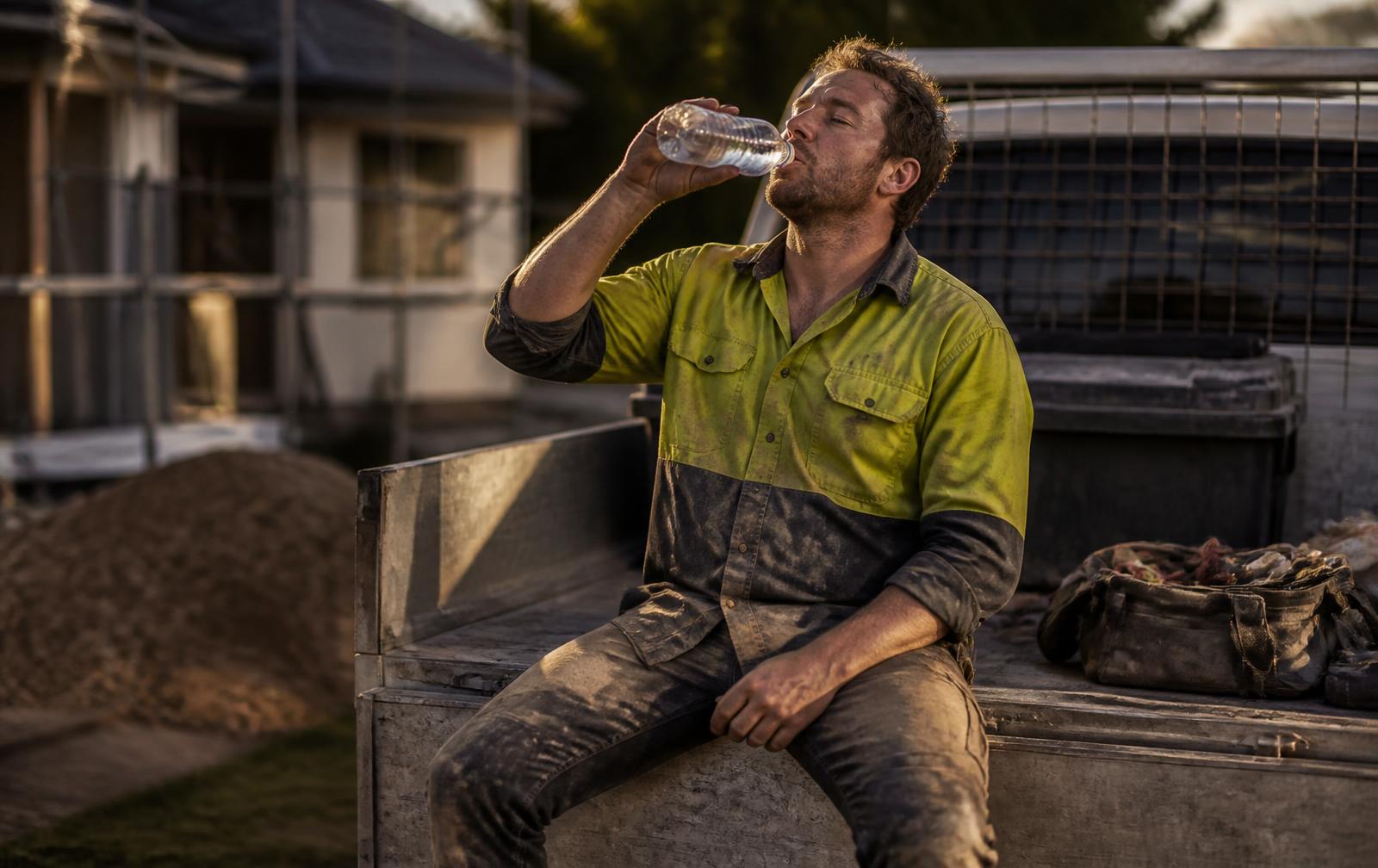
When your job involves hours on your feet, lifting, carrying, repetitive movement, heat or awkward positions, knocking off can feel a lot like finishing a training session — except you may have to front up and do it again tomorrow.
Physical work isn't the same thing as structured exercise, and it isn't useful to pretend otherwise. The demands are less predictable, they last as long as the shift does, and you don't get to choose the sets and reps. But the things that help you turn up in reasonable shape the next day are fairly ordinary: what you drink, what you eat, how you wind down, how much sleep you get, and how you handle any training you do on top of work.
None of what follows assumes you can drop hours, take an extra day off or restructure a roster. Most people can't. It's about the parts that are usually within reach.
Your Job Counts as Physical Load
Physical demand doesn't only come from a gym. If your work has you moving all day, that's load your body is dealing with whether or not it ever gets logged anywhere.
- Hours spent standing, walking or climbing.
- Lifting, carrying, pushing and pulling.
- Repetitive tasks done hundreds of times a shift.
- Awkward or sustained positions — kneeling, overhead work, crouching in tight spaces.
- Working outdoors, in heat, humidity or cold.
- Long shifts, early starts, night work or drive-in travel time.
- Training, sport or a second physical job on top of all of it.
Work looks different across trades, warehouses, sites, farms, kitchens, care work and FIFO rosters, so there's no single profile here. If you're working a swing and training around it, we've set out a roster-specific version in recovery for FIFO workers who train. What's shared is that the workday itself is often the largest physical thing a person does, and recovery makes more sense once you treat it that way. Safe Work Australia's guidance on hazardous manual tasks is the right place to look for the work-design side — loads, task rotation, equipment and job setup are employer obligations, not personal habits.
Start With Fluids
After a long physical day, replacing fluid is usually the simplest and most immediately noticeable thing you can do. How much you need isn't fixed, and anyone quoting you a universal number of litres is guessing.
- Heat and humidity — an Australian summer shift outdoors or in an unairconditioned shed is a different day to the same work in July.
- How long you were working, and how hard.
- Protective clothing and PPE, which can trap heat and increase sweating considerably.
- Your own sweat rate, which varies a lot between people.
- Whether you had reasonable access to water and shade during the shift.
Practical version: drink through the day rather than trying to make it all up afterwards, keep drinking with your evening meal, and take thirst and dark urine seriously as rough signals. Healthdirect Australia covers dehydration and its warning signs, and Safe Work Australia has guidance on working in heat — both are worth reading if heat is a regular part of your job. Symptoms like dizziness, confusion, cramping, nausea or a headache that won't shift after a hot shift aren't a hydration hack away from being fine; they're a reason to stop, cool down and get help.
Eat for the Day You've Actually Had
A physically demanding day uses energy, and under-eating across a working week tends to show up as flatness rather than as anything dramatic. The most common issue isn't the wrong macronutrient split — it's not eating enough, or not eating at sensible intervals, because the day didn't allow for it.
General principles are enough here. Eat enough overall for the work you're doing. Include carbohydrate, which is what fuels sustained physical effort. Include protein across your meals. Get some vegetables and fruit in. Keep meals reasonably regular rather than living on nothing until dinner and then eating everything at once. The Australian Dietary Guidelines and Better Health Channel are the reference points, not whatever's trending.
If food on site is the constraint — no break long enough, no fridge, camp mess hours, a two-hour drive home — the fix is usually logistical: something portable that you'll actually eat, packed the night before. That's less glamorous than a supplement plan and considerably more effective.
Give Your Body a Change of Pace
The point of the first hour after work isn't to do something else demanding. It's to change what you're asking of your body. If you've been standing all day, sitting down properly matters. If you've been in one position, moving a bit differently often feels better than stopping dead.
- Sit or lie down for a while, with your legs up if they're heavy.
- Have a shower and get out of work gear.
- Move gently and comfortably — an easy walk, a stretch, a wander around the yard — if that's what feels good.
- Change position regularly through the evening rather than locking into one chair for four hours.
- Take actual downtime. Doing nothing for a while is part of it, not a waste of the evening.
This isn't a second workout, and it shouldn't feel like one. If a gentle walk sounds unbearable after the day you've had, don't do it — that's useful information rather than a discipline problem.
Sleep Matters When Tomorrow Is Another Workday
Sleep is the part of recovery with the most going for it and the least practical help attached. Telling someone on a 4.30am start with kids at home to “get eight hours” isn't advice, it's arithmetic they've already done.
Shift work, night shifts, rotating rosters, long drives and family responsibilities all make sleep genuinely harder, and Safe Work Australia treats fatigue as a workplace hazard for exactly that reason. Where there's room to move, the usual levers are the ones worth pulling: a consistent-ish sleep window, a dark and cool room, keeping the wind-down period free of screens and heavy meals where you can, and being honest about how caffeine late in a shift affects you.
Where there's no room to move, the realistic goal is protecting the sleep you can get rather than chasing an ideal. Healthdirect Australia has practical information on sleep and on shift work, and persistent sleep problems — or fatigue that's affecting your safety at work — are worth raising with a GP rather than absorbing indefinitely.
Physical Work and the Gym
Plenty of people with physical jobs also train — lifting, running, footy, boxing, whatever it is. That's a good thing, and there's no reason a physical job should rule out training. What matters is that your body doesn't keep separate ledgers for work and training. It's all one total.
A programme that looks perfectly reasonable written down can feel very different in week three of a hot roster, or on the fourth day of a demolition job. If sessions are consistently falling apart, the training plan usually isn't the problem — the total is. We've set out how to balance the two in training when you work a physical job. Our guide to how often should you train? works through weekly frequency, and how long should you rest between workouts? covers the gap between sessions.
- Count work as part of the week's load when you're deciding how many hard sessions to schedule.
- Consider what your job already hammers. If you're lifting and carrying all day, another heavy session in the same pattern may not be what's missing.
- Use the quieter parts of a roster or a season for the harder training, where your schedule allows it.
- Judge a training week by how you turn up to work and to the next session, not by how much you got through.
None of that is a programme, and it isn't individual advice. It's a way of reading your own week. The Train hub has the training-side reading if you want to go further.
What If You're Sore After Work?
Ordinary tiredness and stiffness after a demanding day are common, particularly after unfamiliar work, a heavier job than usual or a return after time off. Some of the same fundamentals apply as after exercise — food, fluids, sleep, comfortable movement — and we've covered what the evidence actually supports in muscle recovery after exercise.
It's worth being careful with labels, though. Soreness after work isn't automatically delayed onset muscle soreness. Our guide to why am I sore after a workout? DOMS explained is useful background where the pattern genuinely matches — unfamiliar effort, generalised soreness that comes on the next day and eases over a few days — but plenty of work-related discomfort doesn't fit that description at all.
Pain that's sharp, localised, severe, one-sided, worsening, accompanied by swelling or numbness, following an obvious incident, or simply not settling is not something to file under normal recovery. That's a reason to get appropriate advice, and to report it at work where it's work-related.
A Simple After-Work Recovery Routine
- Finish the shift and give yourself a change of pace.
- Replace fluids according to your day and the conditions.
- Eat an appropriate meal rather than skipping it.
- Change out of work gear and properly switch off.
- Use comfortable movement or rest, according to how you feel.
- Consider tomorrow's workload before adding another hard workout.
- Prioritise sleep where your schedule allows it.
- Pay attention to any pain or symptoms that feel unusual or concerning.
General information only — not medical, individual training or occupational-health advice. For work-related pain, injury or fatigue concerns, follow your workplace processes and speak with a qualified health professional.
What About Recovery Products?
Some people who train or work physically choose to include topical or other recovery products in their own routine, alongside the basics above rather than instead of them. LactiGo is one product currently featured by Recovery Edition. If you're curious about what it is and how the manufacturer recommends using it, we cover that separately.
Recovery Edition may earn a commission if you buy through links on our LactiGo page, at no additional cost to you. It doesn't change what we publish.
Recovery Between Shifts
One good recovery evening doesn't do much on its own. What counts across a working week, a swing or a busy season is whether the basics happen most days without requiring much thought.
- Fluids through the shift, not just afterwards.
- Meals you'll actually eat, sorted in advance where the day is tight.
- Sleep protected as far as your roster and household allow.
- Genuine downtime built into the evening rather than hoped for.
- Training managed around work rather than bolted on regardless of it.
- Adjustments where circumstances allow — and acceptance that sometimes they don't.
Rosters, camp life, long drives and consecutive night shifts each bring their own complications. Our FIFO recovery guide deals with the swing-and-training combination specifically, the Work hub collects the work-side reading, and the Recover hub covers the habit side more broadly.
When It's More Than Normal Fatigue
Significant or persistent pain, swelling, numbness, weakness, loss of normal function, symptoms that follow an injury, or fatigue that doesn't lift with rest all warrant proper advice from a GP, physiotherapist or other appropriate health professional. So does heat illness, chest pain, breathlessness or anything else that feels serious — those need attention straight away, not an early night.
Nothing here diagnoses anything, and none of it is a reason to keep working through an injury. Work-related injuries and symptoms should be reported through your workplace's processes.
The Bottom Line
If your job is physical, you're already placing substantial demands on your body before any training is added. Recovery doesn't have to be elaborate to be useful — but the basics matter more, not less, when another shift is coming.
Fluids, food, downtime and sleep, plus honest decisions about training on top of work, cover most of it. For the exercise side of the same question, see how to recover after a workout, or browse all our guides.
Sources & further reading
Recovery Edition publishes general informational content. It is not medical advice and is not a substitute for care from a qualified health professional.
- Physical Work
- Recovery Between Shifts
- Tradies
- FIFO
- Workload