Work
Does a Physical Job Count as Exercise? What It Means for Your Training and Recovery
A physical job counts as physical activity — but it isn't automatically the same as structured exercise. Here's what that means for training load, programming and recovery.
Recovery Edition Editorial ·
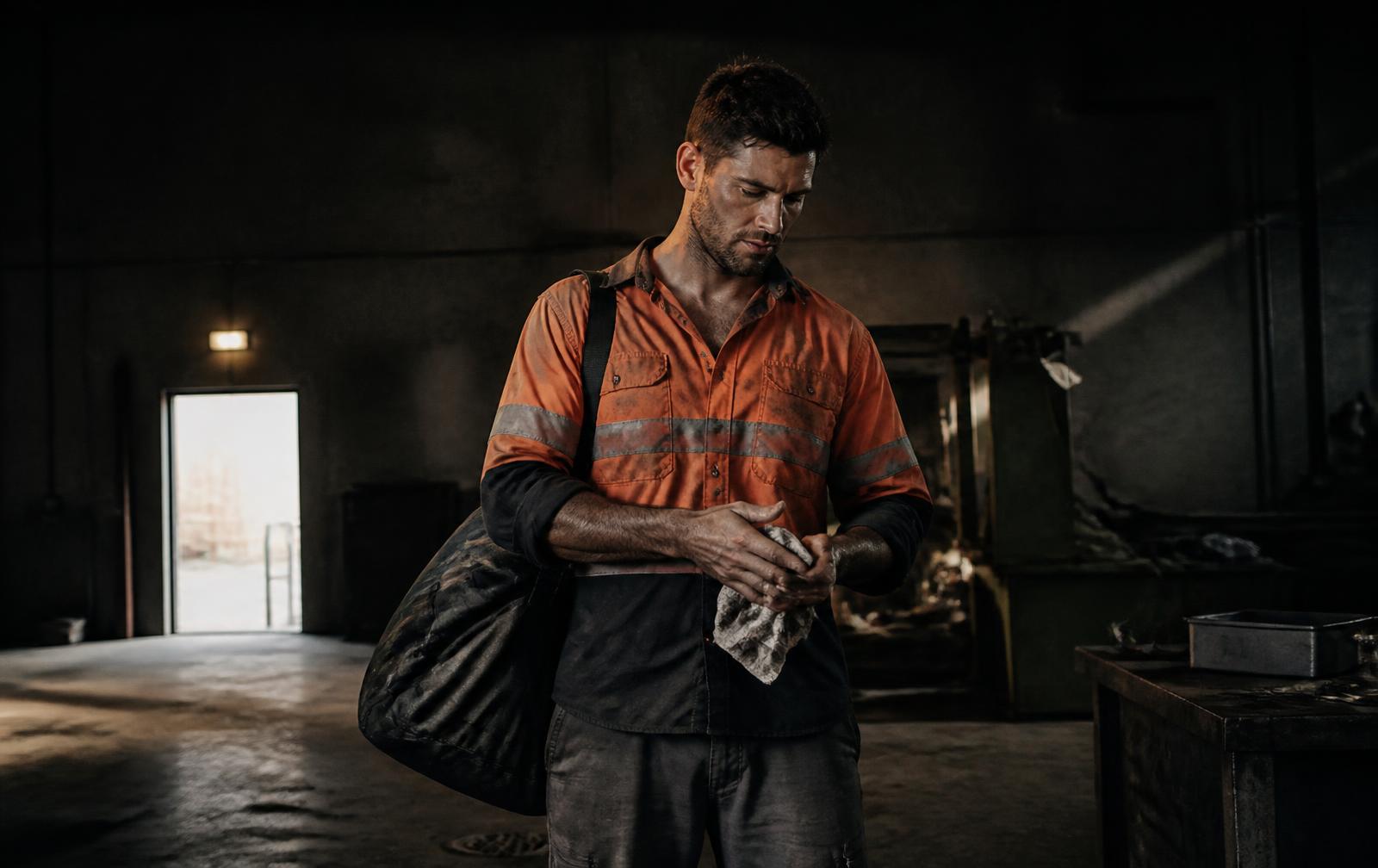
If you spend your shift lifting, carrying, climbing, walking, digging, pushing, pulling or working on your feet, it can feel strange to finish work and be told you should exercise. You have already been moving for hours.
So does a physical job count as exercise?
The short answer: a physical job absolutely contributes to your physical activity and total workload. But it is not necessarily the same thing as structured exercise, and it does not automatically provide the same fitness or health benefits.
That distinction matters even more if you work a physical job and train outside work. Your gym program does not exist separately from your shift. Your body has to recover from both.
A physical job counts as physical activity
The World Health Organization defines physical activity as bodily movement produced by skeletal muscles that requires energy expenditure — and that definition explicitly includes movement performed as part of someone's work.
So a construction worker carrying materials, a warehouse worker walking and lifting throughout a shift, or a FIFO worker performing manual tasks is physically active while working. That workload counts.
But physical activity and exercise are not quite the same thing. Exercise is generally planned and structured, often with a particular purpose: improving strength, cardiovascular fitness, endurance, mobility or another aspect of physical capacity. Work is organised around getting the job done. Your body is doing the work either way, but the stimulus can be very different.
Why eight hours of physical work isn't the same as an hour in the gym
A well-designed training session usually has a defined purpose. You might:
- lift a particular load
- perform a planned number of sets
- run at a particular pace
- deliberately raise your heart rate
- progressively increase training difficulty
- rest between efforts
- stop when the session is complete
Physical work doesn't normally operate like that. A shift may involve relatively low or moderate effort repeated for many hours. You may have limited control over the movement pattern, pace, rest periods or recovery opportunities. You might also repeat the same movements again and again.
That difference is one reason researchers distinguish occupational physical activity from leisure-time physical activity. They both involve movement. They don't necessarily affect the body in exactly the same way.
The "physical activity paradox"
Researchers sometimes use the term physical activity paradox to describe an interesting observation. Leisure-time physical activity is consistently associated with health benefits. High levels of occupational physical activity have not always shown the same associations, and some observational research has even found higher cardiovascular or mortality risk among groups performing high levels of occupational physical activity.
That does not mean physical work is inherently bad for you, and it certainly doesn't mean researchers have proved that having a physical job causes cardiovascular disease.
There are important complications. People in physically demanding occupations can differ from people in less physical occupations in many ways, including socioeconomic circumstances, working conditions, recovery opportunities, health behaviours and other exposures. Some studies also rely on self-reported physical activity, and the quality and consistency of the evidence varies between worker populations — a systematic overview of the paradox in healthcare workers (Janssen and Völker-Rehage) rated the body of evidence as low, with moderate-to-high risk of bias.
What the evidence suggests
- Work-related movement counts as physical activity.
- Leisure-time activity is consistently associated with health benefits.
- Occupational activity has not always shown the same associations.
What is still uncertain
- Whether the paradox reflects cause or confounding.
- How much self-reported activity data distorts findings.
- How consistently it applies across different occupations.
So the physical activity paradox should be treated as an area of ongoing research — not a reason to tell people that movement at work is unhealthy. What it does show is that we should not automatically assume physical work, structured exercise and identical health effects are the same thing. They are different activity domains.
Should you still train if you have a physical job?
Potentially, yes.
Recent research examining workers across different occupational activity levels (Cillekens and colleagues) found that higher leisure-time physical activity was generally associated with lower all-cause and cardiovascular mortality across most levels of occupational physical activity. That is an observational association rather than proof of cause, but it suggests having a physical job does not necessarily make purposeful exercise irrelevant.
Australia's current 24-hour movement guidelines recommend adults perform different kinds of physical activity at different intensities. For adults aged 18–64, that includes:
- moderate-to-vigorous physical activity for 30 minutes or more on most days
- muscle-strengthening activity involving the major muscle groups on at least two days each week
- functional activity targeting mobility, balance and coordination on at least three days each week
- several hours of light-intensity activity each day
A physical job may contribute substantially to some of that activity. Whether it covers everything depends on what you actually do at work. Someone walking for much of a shift has a different physical exposure from someone repeatedly lifting heavy materials — and neither automatically follows a progressive strength or cardiovascular training program.
Your job belongs in your training load
This is the part that matters if you work and train. Don't look at your gym program in isolation. Think about your total physical load. Our guide on training when you work a physical job works through how to structure a week around that.
Imagine two people following the same four-day strength program. One works behind a desk. The other spends ten hours on their feet performing manual work. Their gym program might be identical on paper. Their total weekly physical demands are not.
Recovery research in sport commonly treats performance as a balance between stress and recovery, and the 2018 consensus statement on recovery and performance (Kellmann and colleagues) is explicit that training isn't the only source of stress — other life demands matter too. For a physically active worker, occupational workload is another demand that needs to be considered.
That doesn't mean you need a complicated readiness algorithm. It means paying attention to context.
Training after a physical shift
There is no universal rule that says you should or shouldn't train after work. The better question is: what did work already demand from you today?
If the shift was relatively easy and you feel good, your planned training may be completely reasonable. If you spent ten or twelve hours performing demanding manual work, repeatedly lifting, working in heat or accumulating substantial fatigue, that changes the picture. You might adjust:
- training volume
- exercise selection
- intensity
- session duration
- the order of your training week
That doesn't automatically mean skipping training. Sometimes it simply means recognising that today's work already contributed to the load. If you're weighing that up mid-week, how long to rest between workouts and how often you should train are useful companions to this article.
Don't make every session another test
People with demanding jobs can fall into the trap of treating every gym session as something they have to "win". Hard shift. Hard workout. Repeat.
But productive training isn't determined by how destroyed you feel afterwards. If work already supplies a large amount of physical stress, your gym program can be more deliberate. You may get more value from a manageable amount of high-quality training than from adding unnecessary volume simply because a generic program says you should.
The goal is not to avoid effort. It's to spend that effort where it actually helps.
Watch the pattern, not one bad day
Feeling tired after a hard shift is normal. One poor workout doesn't mean you're under-recovered. Look for patterns instead. For example:
- performance repeatedly dropping across sessions
- loads that normally feel manageable consistently feeling unusually difficult
- soreness that is not settling as expected
- persistent fatigue
- declining motivation to train
- disrupted sleep
- feeling as though you're continually carrying fatigue from one shift or session into the next
These signs are not diagnostic of a particular condition. They are simply reasons to look at the bigger picture. Your training volume, work demands, sleep, nutrition and recovery opportunities may need adjusting.
Persistent, severe or unexplained fatigue, pain or other symptoms should be discussed with an appropriate health professional.
Recovery becomes part of the program
If your work and training both demand something physically, recovery isn't an optional extra you add after everything else. It is part of managing the total load. Start with the basics — our guide to recovery after physical work covers the day-to-day version of this.
Sleep
Australia's current adult movement guidelines recommend 7–9 hours of good-quality sleep for adults aged 18–64, alongside consistent bed and wake times. That can be difficult for shift workers and FIFO workers, and sleep requirements are individual. The 2021 expert consensus on sleep and the athlete (Walsh and colleagues) shows why simplistic sleep rules can be misleading: training schedules, travel, stress and individual sleep needs all affect sleep and recovery.
The practical point is straightforward. If work and training are both demanding, repeatedly cutting sleep to fit more training into the week may work against what you're trying to achieve.
Food
Physical work requires energy. Training requires energy. Trying to do both while chronically under-fuelling can make the whole week harder. Your exact nutritional requirements depend on factors including body size, training, occupational workload and goals — but recovery isn't built from supplements while basic food intake is ignored.
Hydration
This becomes particularly relevant for people working outdoors, underground, in heat, in heavy PPE or across long shifts. Fluid needs can change substantially with environment and sweat losses. Treat hydration as part of the working day rather than something you suddenly think about when you arrive at the gym.
Actual downtime
Not every free hour needs another physical task attached to it. Recovery can sometimes mean reducing load rather than adding another recovery technique — which is the distinction we draw in rest day vs active recovery.
FIFO changes the equation again
FIFO work can combine several recovery challenges at once:
- long shifts
- physically demanding work
- heat
- travel
- altered routines
- early starts or night shifts
- limited control over food or training schedules
- disrupted sleep timing
That doesn't mean FIFO workers shouldn't train. Plenty do. But a program that works perfectly during time at home may need to change during a demanding swing. We go through that in detail in recovery after a long shift: FIFO and trades.
Instead of asking "what is my ideal gym program?", it may be more useful to ask "what training can I recover from during this part of my roster?" Those aren't always the same thing.
Physical work can build capacity — but specificity still matters
There is another side to this. Doing physical work can absolutely develop physical capacity. Someone who carries equipment every day may become very capable at carrying equipment. Someone who walks kilometres during every shift will adapt to that repeated activity.
But fitness adaptations are specific. Being capable of doing your job does not automatically mean you have developed every component of fitness you might care about. Work capacity, maximal strength, aerobic fitness, mobility and sport-specific performance are not interchangeable. That's where purposeful training can complement a physical job rather than simply adding more exhaustion to it.
The better question: what is missing?
Instead of asking "does my job count as exercise?", try asking "what does my job already give me — and what is my training supposed to add?"
- If work already gives you hours of low-to-moderate activity, perhaps your training doesn't need endless additional volume.
- If your job involves repetitive lifting but little structured cardiovascular work, your priorities may be different.
- If work is extremely demanding during one part of a FIFO roster and lighter during another, your training could change with the roster.
This is where individual programming becomes useful. Your job isn't something to ignore when planning training. It's part of the context.
Work. Train. Recover.
A physical job counts. The kilometres walked count. The loads carried count. The hours standing count. The repetitive tasks count.
But counting as physical activity does not automatically make work equivalent to a balanced exercise program. And if you choose to train as well, the goal isn't to pretend the workday didn't happen. It's to build training around the life you're actually living.
Work
Training
Sleep
Recovery
One system, not four
Keep reading
Training when you work a physical job — how to build a gym week around shift work instead of against it.
Recovery after a long shift: FIFO and trades — a practical routine for long swings and long days.
Recovery after physical work — the everyday basics for people whose job is the workout.
How long should you rest between workouts? — what the research says about spacing sessions.
Rest day vs active recovery — when to move gently and when to do nothing.
How often should you train? — setting a weekly frequency you can actually recover from.
Frequently Asked Questions
Does a physical job count as physical activity?
Yes. Physical activity includes movement performed as part of work. A physical job can therefore contribute substantially to your total daily and weekly activity.
Is a physical job the same as exercise?
Not necessarily. Exercise is usually planned and structured around a particular fitness goal. Occupational activity is determined primarily by the demands of the job. Both involve physical activity, but the type, duration, intensity and opportunity for recovery can differ.
Do I still need to exercise if I have a physical job?
It depends on the demands of your job, your health, your goals and the types of activity you're already doing. A physical job may provide a large amount of movement without necessarily providing all the strength, aerobic, mobility or functional training you want.
Should I go to the gym after a physical shift?
There is no universal rule. Consider the demands of the shift, how you are recovering, your planned session and your overall weekly workload. Training may sometimes need to be adjusted rather than automatically skipped.
Does physical work count towards Australian activity recommendations?
Work-related movement contributes to physical activity. But Australia's current guidelines recommend a variety of activity types and intensities, including moderate-to-vigorous activity, muscle strengthening, functional activity and light activity. Whether your job covers those recommendations depends on what the work actually involves.
Sources & Further Reading
- World Health Organization — Physical activity (fact sheet)
- Australian Government Department of Health, Disability and Ageing — Recommendations for adults (18 to 64 years)
- Australian Government — Australian 24-hour movement guidelines for adults and older adults
- Coenen P et al. — Associations of occupational and leisure-time physical activity with all-cause mortality: an individual participant data meta-analysis (Br J Sports Med)
- Cillekens B et al. — Should workers be physically active after work? Leisure-time physical activity and mortality across occupational physical activity levels (J Sport Health Sci)
- Janssen T, Völker-Rehage C — Leisure-time and occupational physical activity and the physical activity paradox in healthcare workers (Int J Nurs Stud)
- Kellmann M et al. — Recovery and Performance in Sport: Consensus Statement (Int J Sports Physiol Perform)
- Walsh NP et al. — Sleep and the athlete: narrative review and 2021 expert consensus recommendations (Br J Sports Med)
Recovery Edition publishes general informational content. It is not medical advice and is not a substitute for care from a qualified health professional.
- physical work
- training load
- recovery
- FIFO