
Recovery Report
Peptides are everywhere.
But there's another compound worth knowing about.
Carnosine is naturally present in human muscle. It's a dipeptide made from two amino acids, and researchers have been studying its relationship with exercise and muscle physiology for years.
So what exactly is it — and why are we suddenly interested in a topical product containing it?
Scroll to read
The peptide conversation has exploded
Peptides have moved well beyond research papers and specialist circles.
They're now being discussed across gyms, podcasts, social media and performance communities.

But the word “peptide” covers a huge range of compounds — and not everything in that conversation is the same.
One particularly interesting molecule isn't new at all.
It's already naturally present in the human body.
Its name is carnosine.
“Carnosine isn't an injectable trend. It's a naturally occurring dipeptide found in human tissue, including skeletal muscle.”
First, what exactly is carnosine?
Carnosine is a naturally occurring dipeptide composed of two amino acids: beta-alanine and histidine.
It is found in several tissues in the human body and is present in particularly high concentrations in skeletal muscle.
Carnosine
Naturally present in human tissue, including skeletal muscle
So… is carnosine a peptide?
Technically, carnosine is a dipeptide because it consists of two amino acids joined together.
That is very different from many of the injectable compounds commonly associated with today's online “peptide” conversation. Being in the same broad chemical family does not mean they behave the same way or do the same things.
The research context
Why does carnosine come up in sports science?
Muscle carnosine has been studied in exercise physiology largely because of its role as an intracellular buffer: during high-intensity exercise, muscle becomes more acidic, and carnosine is one of the compounds researchers examine in relation to those changes in acidity.
Because the body builds carnosine from beta-alanine and histidine, beta-alanine availability is a limiting factor. That is why oral beta-alanine supplementation has been studied extensively — increasing beta-alanine availability can raise muscle carnosine content. This body of work is summarised in position statements such as the International Society of Sports Nutrition's review of beta-alanine (Trexler et al., 2015) and in reviews of muscle carnosine and exercise (Sale et al., 2012).
One point matters before we go further: that research concerns muscle carnosine and oral beta-alanine intake. It is not evidence about any particular topical product.

01
Naturally present in muscle
02
Studied in exercise physiology
03
Connected to established beta-alanine research
And that led us to a different question.
What about carnosine in a topical gel?
Recovery Edition finds
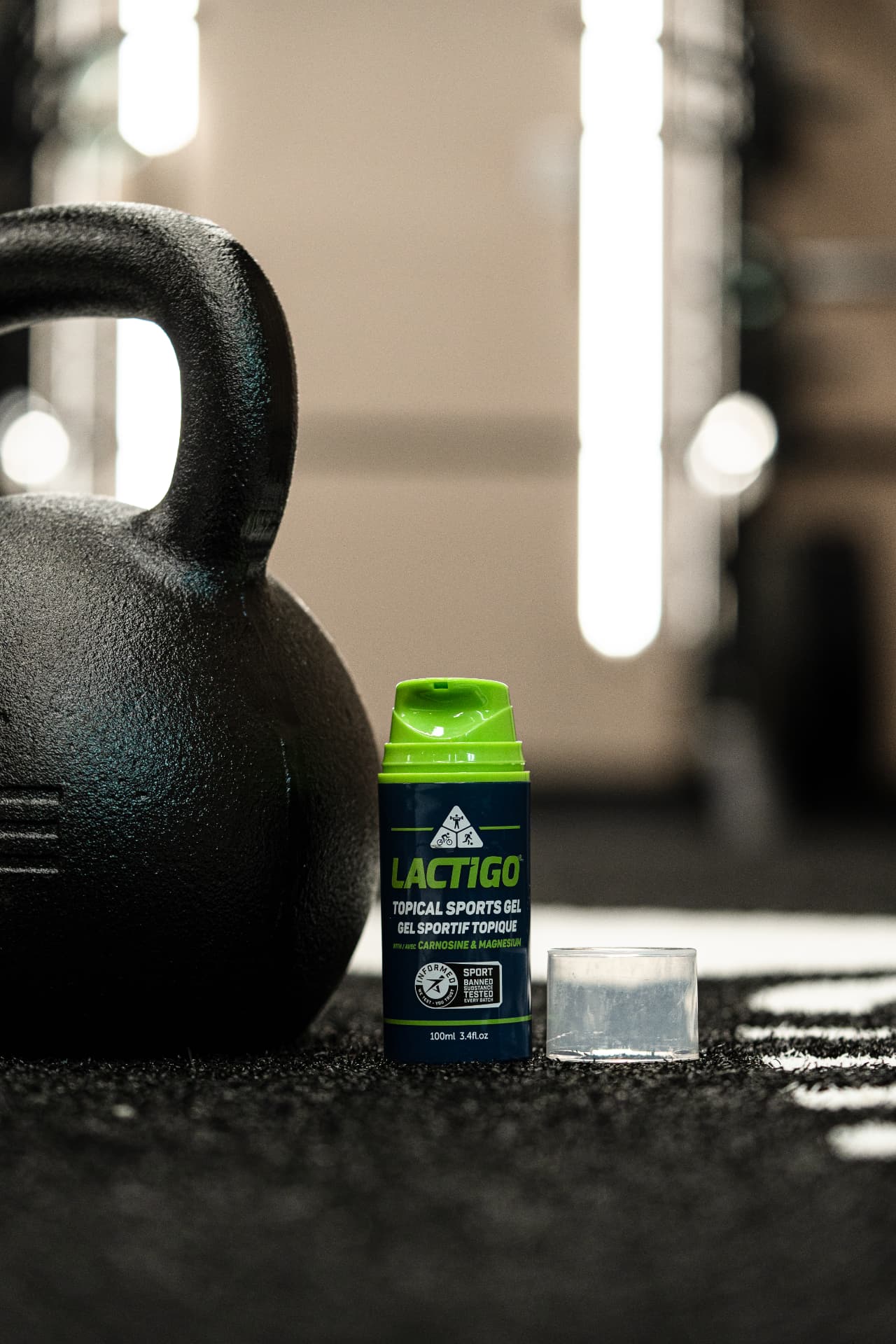
Meet LactiGo.
LactiGo takes a very different approach.
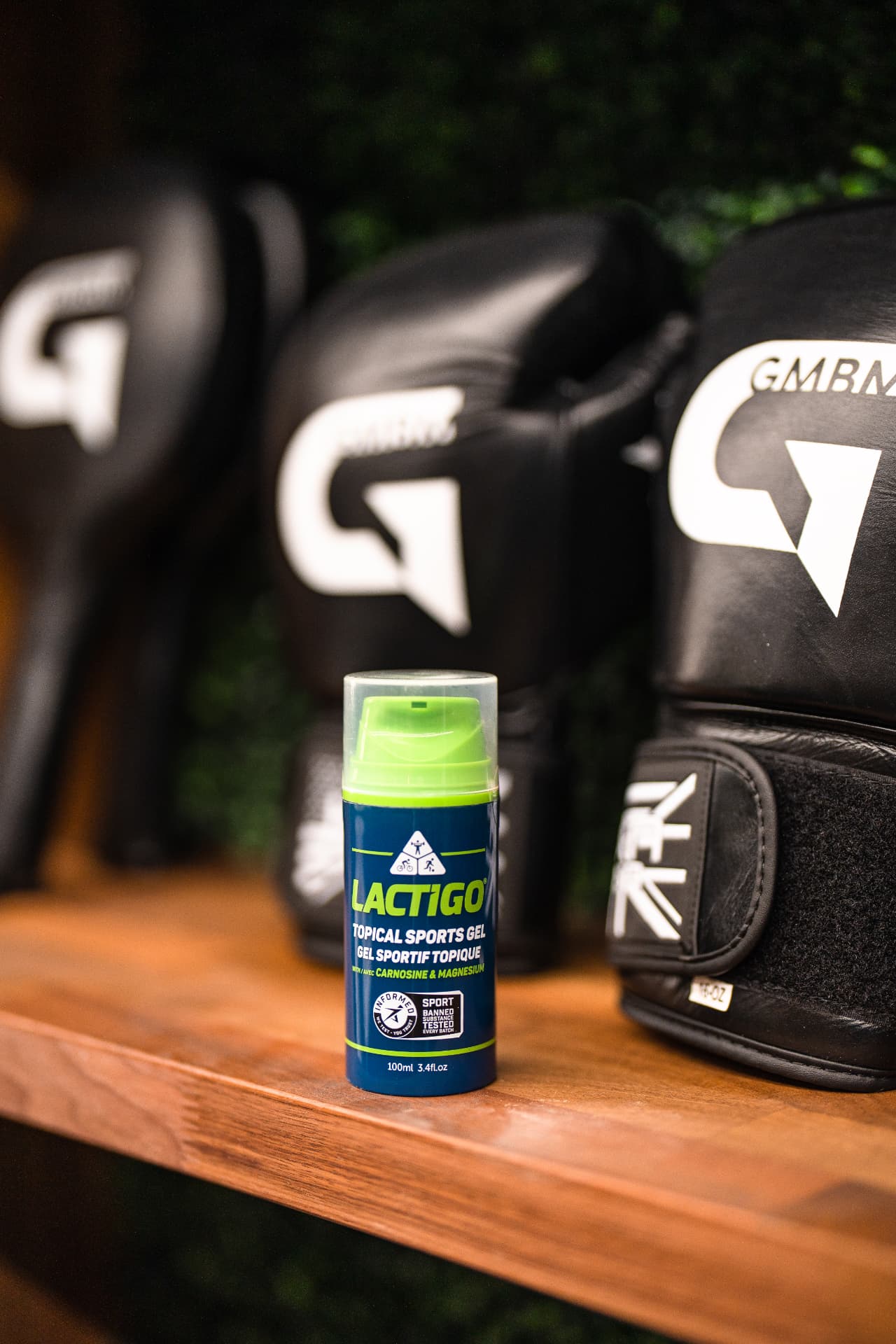
It's a topical sports gel containing carnosine and magnesium that is applied directly to the skin.
No injection.
No mixing powders.
No swallowing capsules.
That's what made the product interesting enough for us to take a closer look.
You'll continue to the official LactiGo store. Recovery Edition may earn a commission if you purchase through this link, at no additional cost to you.
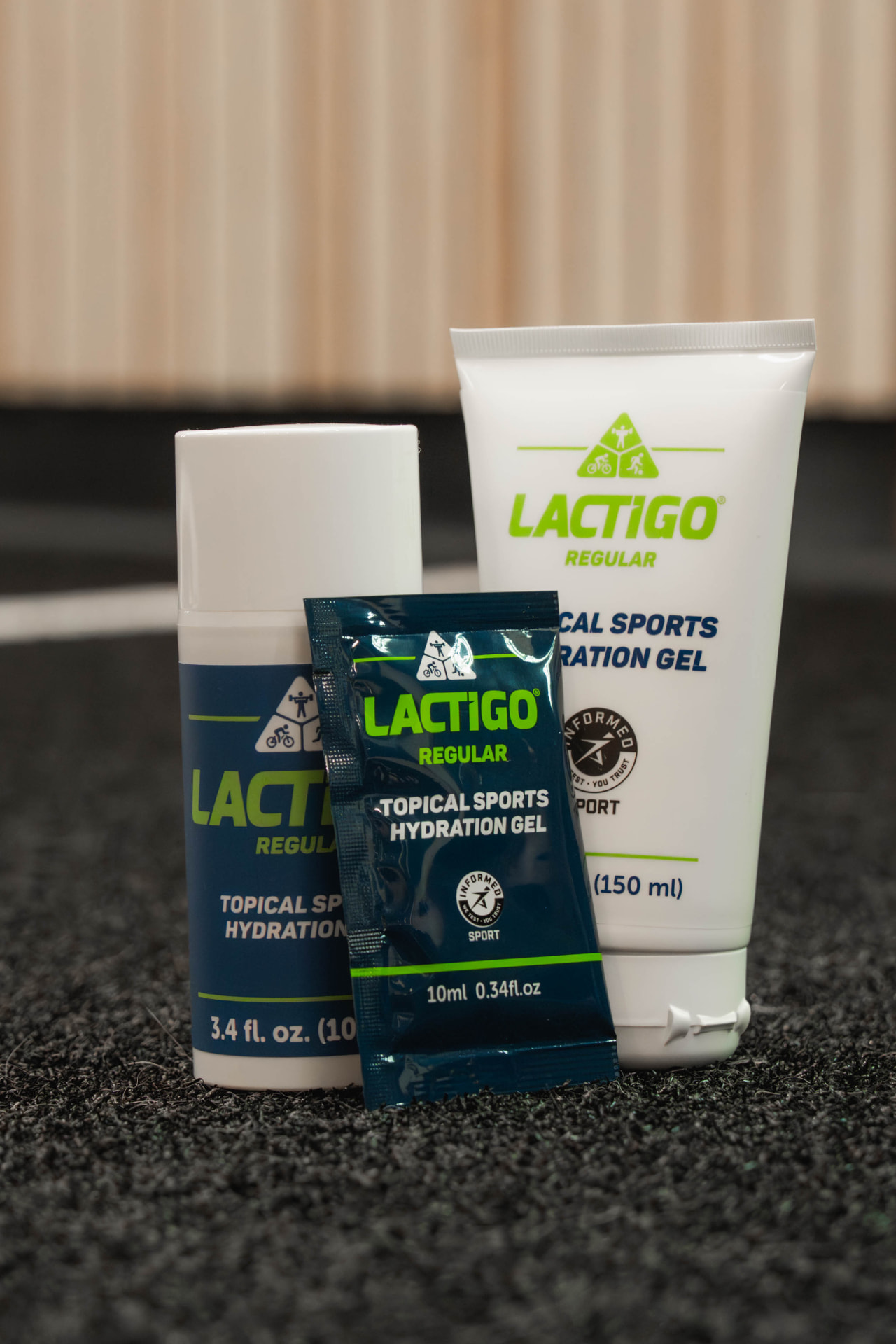
What's actually in LactiGo?
Ingredient 01
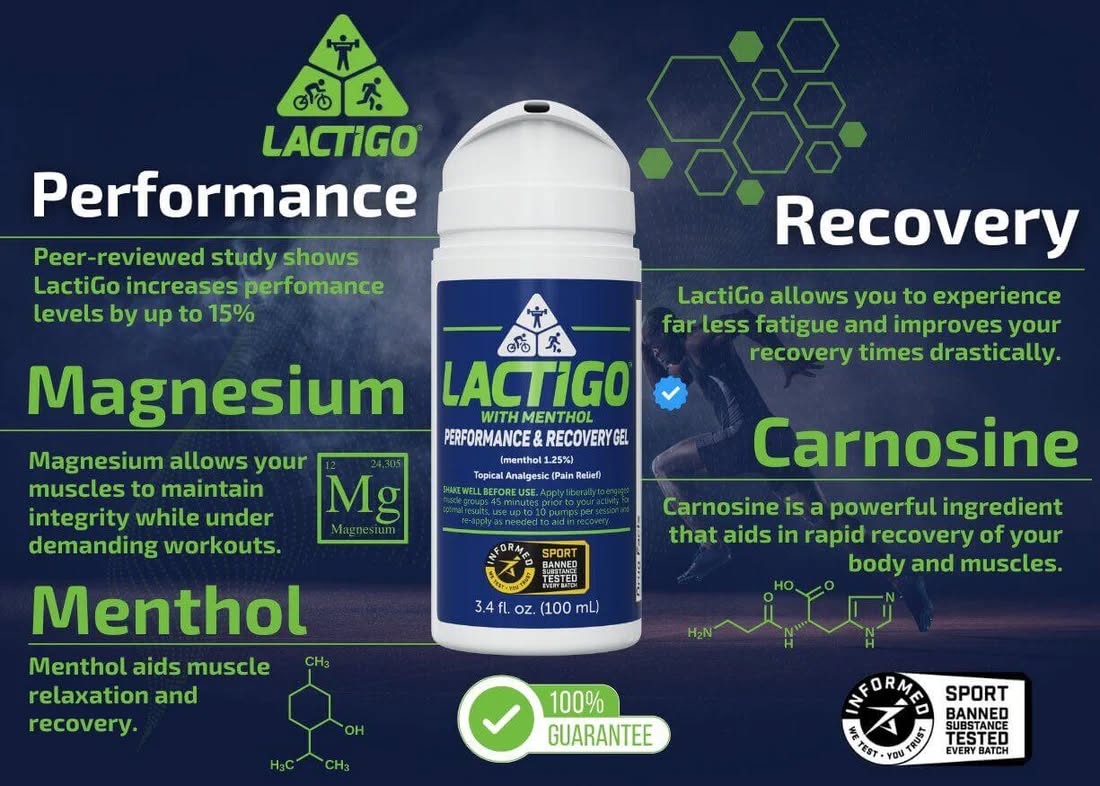
Carnosine
Carnosine is a dipeptide of beta-alanine and histidine that occurs naturally in human tissue, including skeletal muscle. LactiGo lists it as the key ingredient in its topical gel formulation.
Ingredient 02
Magnesium
Magnesium is an essential mineral that the body requires as part of normal muscle function. LactiGo includes magnesium in its formulation; we don't extend that beyond what the product information states.
Ingredient details reflect LactiGo's published product information. Always read the current label on the official store — formulations and labelling can change.
Affiliate link — Recovery Edition may earn a commission if you purchase, at no additional cost to you.
Editorial note
But does topical carnosine work the same way?
This is where we want to be careful. The research described earlier looked at muscle carnosine content and at oral beta-alanine intake. Those findings should not automatically be treated as proof that a topical carnosine product produces identical effects — different ingredient, different route, different studies.
For general background on carnosine and beta-alanine, credible starting points include Sale et al. (2012) and the ISSN position stand on beta-alanine (2015). Those are studies of the compound, not of any brand.
Anything LactiGo says about its own formulation is a separate matter, and belongs to LactiGo. If you want to read the company's own account of how it developed its topical approach, that information sits on its official website — we'd rather point you there than paraphrase it into something stronger.
What research tells us
- Carnosine occurs naturally in human tissue, including skeletal muscle.
- Muscle carnosine has been studied in exercise physiology.
- Beta-alanine supplementation has an established research literature relating to muscle carnosine.
What it doesn't automatically prove
- That every method of delivering carnosine behaves identically.
- That research on oral beta-alanine proves LactiGo-specific effects.
- That topical products should be treated as equivalent to injectable peptide therapies.
That's why we think it's more useful to understand what LactiGo is — rather than make it something it isn't.
Product concept
Why make it topical?
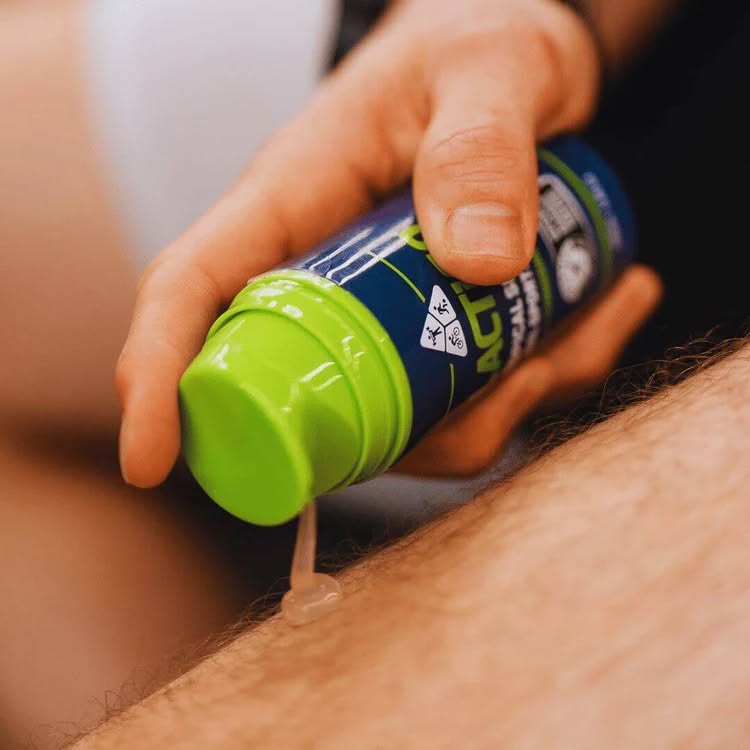
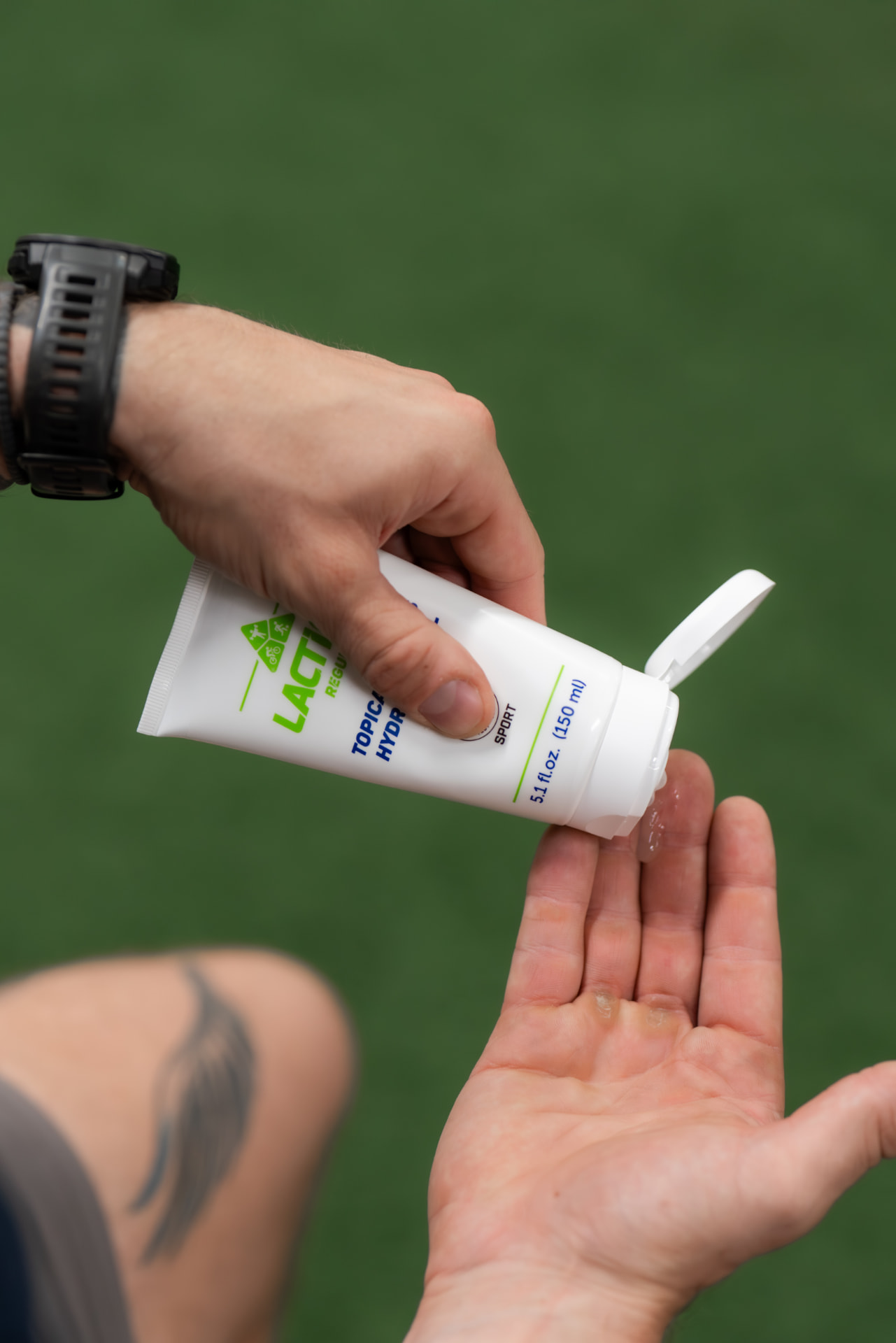
LactiGo's stated concept is straightforward: put carnosine and magnesium into a gel that is applied to the skin over working muscles, used around physical activity, rather than delivered as a powder, capsule or injection.
How much you use, where you apply it and when is set out in the directions on the product itself. We don't publish our own instructions, timings or absorption figures for it.
- 01Apply
- 02Follow product directions
- 03Continue your normal routine
Affiliate link — you'll continue to the official LactiGo store. Recovery Edition may earn a commission if you purchase, at no additional cost to you.
What we can verify
Already being used in sport
LactiGo is sold as a sports product and is used by everyday gym-goers, runners and athletes who buy it directly from the company's store. That much is plain from the product's own marketplace.
Beyond that, we only publish what we can check. Recovery Edition does not run testimonials, athlete endorsements, customer counts or certification claims on this page unless we have verified them in LactiGo's official, current materials — so you won't find invented social proof here. For the company's own athlete, testing and certification statements, read them at the source on the official store.
Verified product claims
Any testing, certification or athlete-use statements published here will come directly from LactiGo's official current materials. Until then, we point you to the source rather than summarise it.
Who is LactiGo made for?
LactiGo is marketed as a sports gel for active people. That covers a fairly broad audience — including people fitting training around physically demanding work and long shifts. Who a product is intended for is not the same as a promise about results.

Gym & strength
Lifting, strength blocks and regular gym training.

Running & endurance
Runners, riders and endurance sessions.

Sport
Team sport, training loads and competition schedules.

Physical work
Trades, FIFO rosters and physically demanding jobs.
Recovery doesn't need to be complicated.
- 01
Train
- 02
Hydrate + refuel
- 03
Your recovery routine
- 04
Rest
A product like LactiGo is something you can look into as one optional part of that routine. It isn't a substitute for sleep, food, hydration, sensible training or advice from a qualified health professional.
Questions people ask
- Is carnosine a peptide?
- Yes — carnosine is a dipeptide, meaning it is made of two amino acids (beta-alanine and histidine) joined together. It occurs naturally in human tissue, including skeletal muscle.
- Is LactiGo an injectable peptide?
- No. LactiGo is a topical sports gel that is applied to the skin. It is not an injectable product and should not be confused with the injectable compounds often discussed online as “peptides”.
- What is LactiGo?
- According to the manufacturer, LactiGo is a topical sports gel containing carnosine and magnesium that is applied directly to the skin around physical activity.
- What ingredients are in LactiGo?
- LactiGo's product information lists carnosine and magnesium as its key ingredients. For the full ingredient list, always read the current product label on the official LactiGo store.
- How is LactiGo used?
- It is applied to the skin. Follow the directions on the official product packaging — Recovery Edition does not publish its own dosing or timing instructions.
- Where can I buy LactiGo in Australia?
- Through the official LactiGo online store. Our links take you there directly.
- Does Recovery Edition earn money if I purchase?
- Yes. Recovery Edition is an independent publisher and participates in the LactiGo affiliate programme. We may earn a commission if you purchase through our links, at no additional cost to you.
Recovery Edition finds
Curious about carnosine?
See why LactiGo has taken a topical approach.
Continue to the official LactiGo store.
Recovery Edition may earn a commission when you purchase through our LactiGo links. This does not increase the price you pay.